
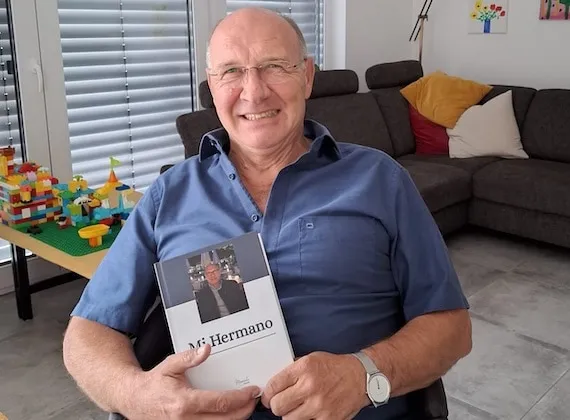
“With just one question per week, I was able to record my life story. That was a lot of fun! I am proud of my book and am already preparing the second book.”
Werner
Germany
A guided life story book
The questions you keep meaning to ask can become the stories your family keeps. Meminto guides a parent, grandparent—or you—through a lifetime of memories and turns every answer into a personal printed book.
One-time purchase · no subscriptionFrom $99 · one-time purchase
Excellent4.8TrustScore
And does anyone else know that?
Before the stories fade
One day, “tell me again” can become a question no one is able to answer.
What is a Life Story Book?
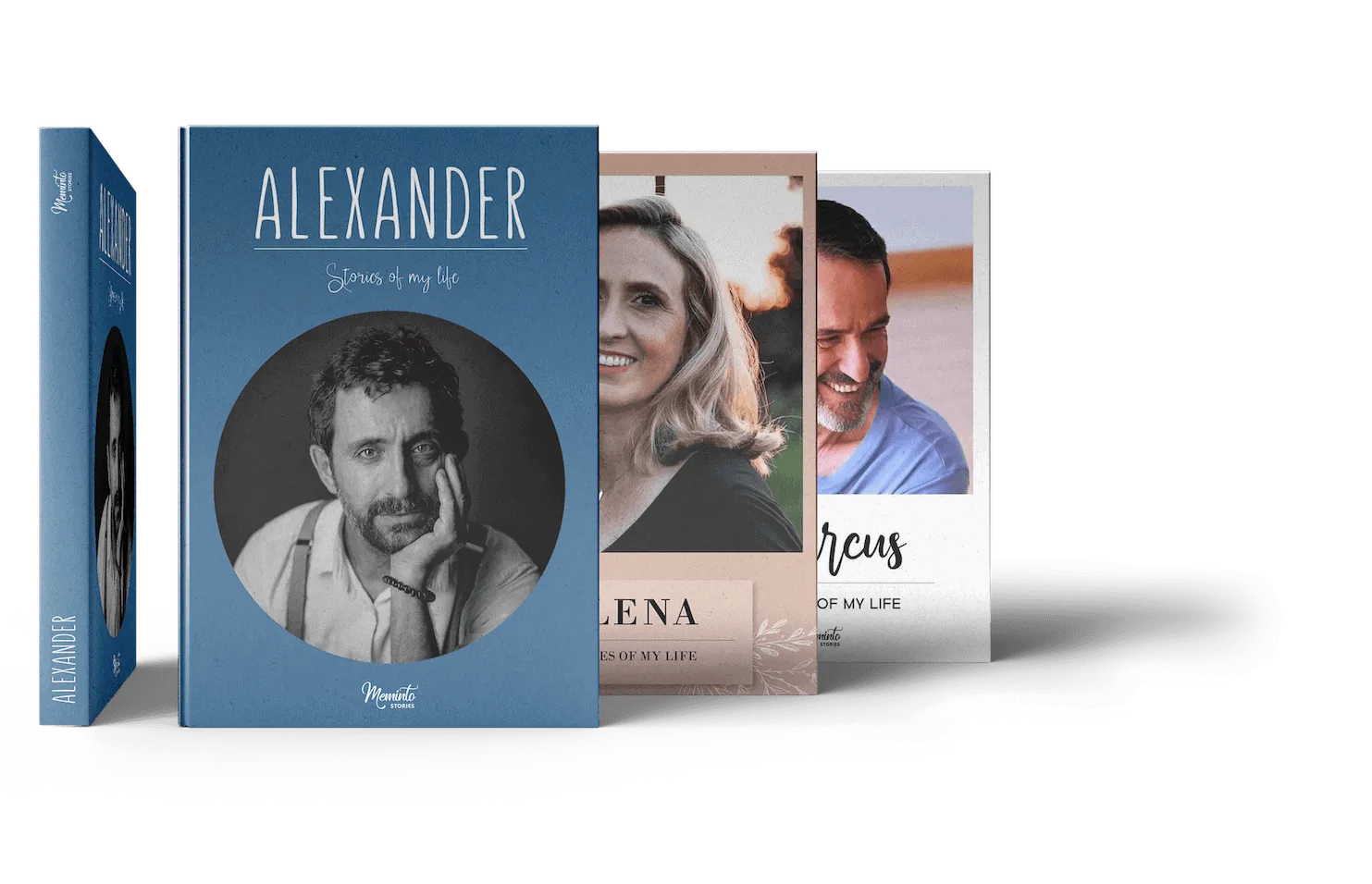
A Life Story Book is a guided memory book that helps a person record the story of their life. Meminto provides thoughtful questions covering childhood, family, work, love, beliefs and defining moments. The storyteller answers in their own time; photos, words, voice and video then come together in a personal hardcover book. It works as a gift for a parent or grandparent, or as a memoir book you create for yourself.
Meminto asks the questions. All you do is answer — spoken or written, whichever feels easier.
 01
01Meminto suggests the questions that carry a life story. You can adapt, remove or add any question.
Flexibly adapt the questions.
 02
02Every week, your loved one receives a new question by app, email or phone call. They simply start telling. Those who prefer writing can type.
At the pace that suits you.
 03
03Each answer becomes a chapter. Once enough has been told, the book goes to print: a matte 5.8 × 8.3-inch hardcover, printed in full colour.
Memories become pages.
 04
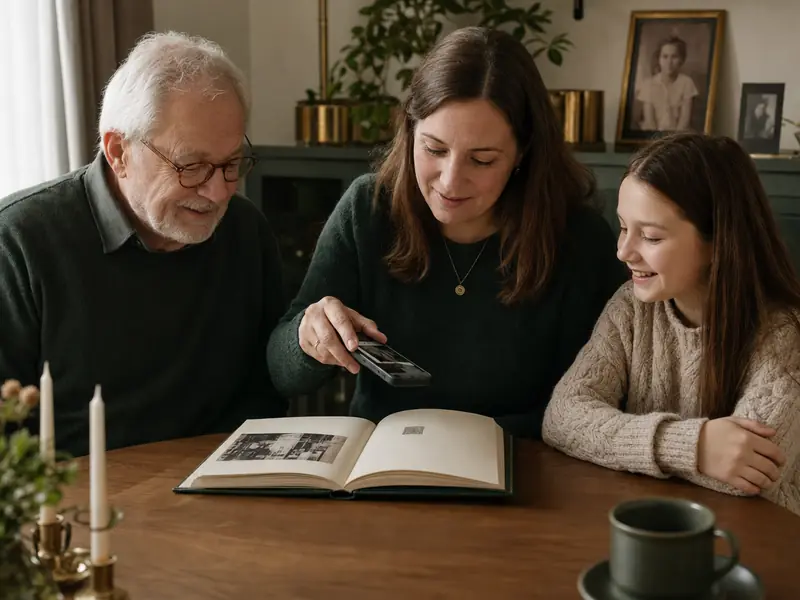
04Every story is immediately there for the whole family. In the printed book, a QR code leads back to the real voice. The e-book can be shared worldwide.
The memory stays alive.
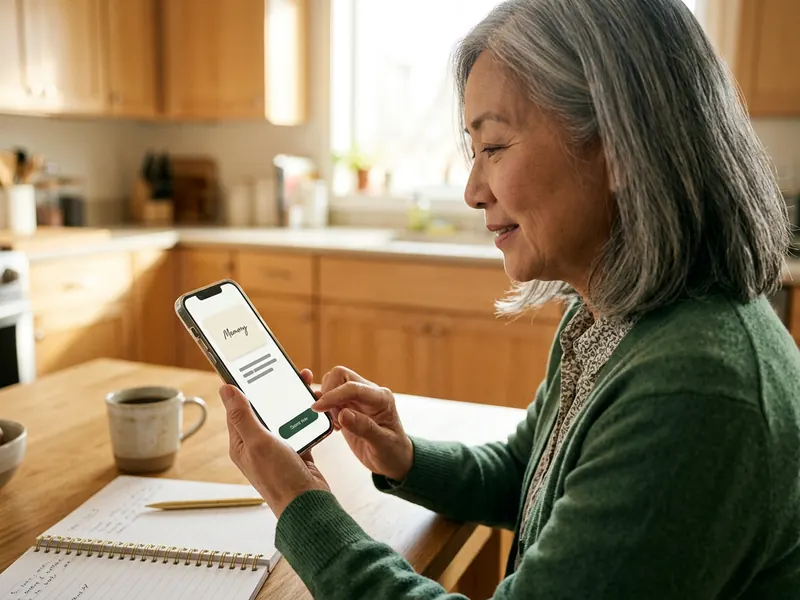 01
01Meminto suggests the questions that carry a life story. You can adapt, remove or add any question.
Any question can become your own.
 02
02Every week, you receive a new question by app, email or phone call. You simply start telling, or type if you would rather write down your thoughts.
At the pace that suits you.
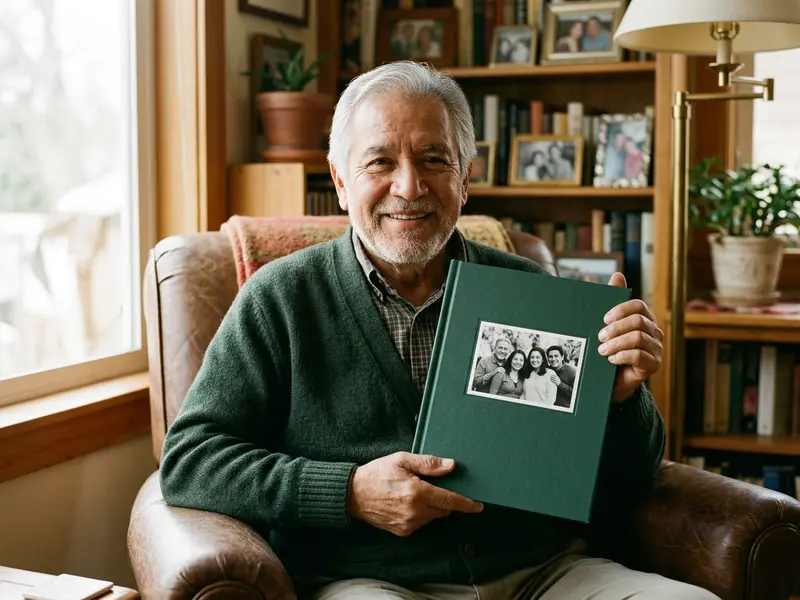 03
03Each answer becomes a chapter. Once enough has been told, it goes to print: a matte 5.8 × 8.3-inch hardcover, in full colour. Additional copies are available on request.
Memories become pages.
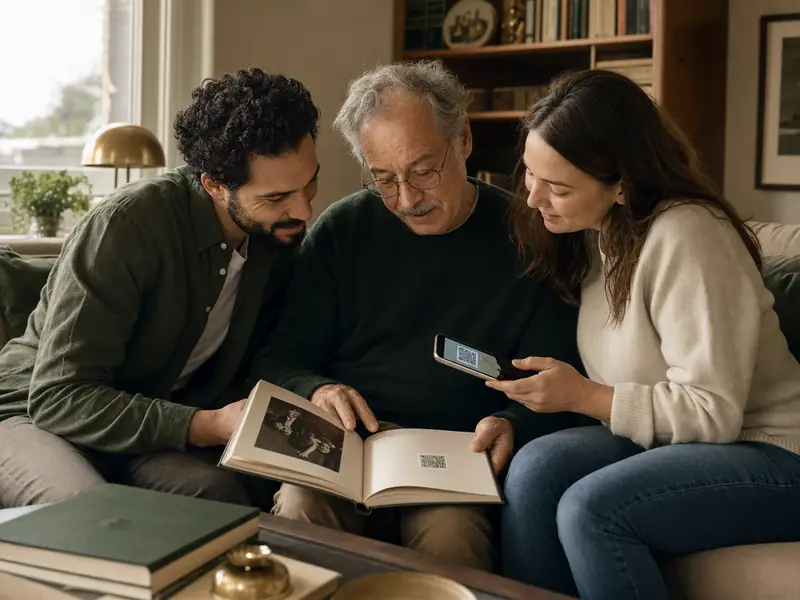 04
04Every story becomes available to others once you share it. In the printed book, a QR code leads directly to the real voice. You can share the e-book worldwide.
The memory stays alive.
Sounds doable? Then the first question is all it takes today.
4.8From $99 · one-time purchase · up to 2 years to finish
The first step is already there
For a Life Story Book, the questions guide a person through their memories. Each one can be adjusted, skipped or replaced with your own; only the Blank Book starts completely free.
How did your parents choose your name?
What is your favourite childhood memory?
Which piece of advice stayed with you?
What would you like your great-grandchildren to remember?
Nothing is set in stone
Keep it, rewrite it, skip it, or add your own. The storyteller’s life—not a fixed questionnaire—decides what belongs in the book.
Features

Speak in any language – we turn it into text.
Learn more →
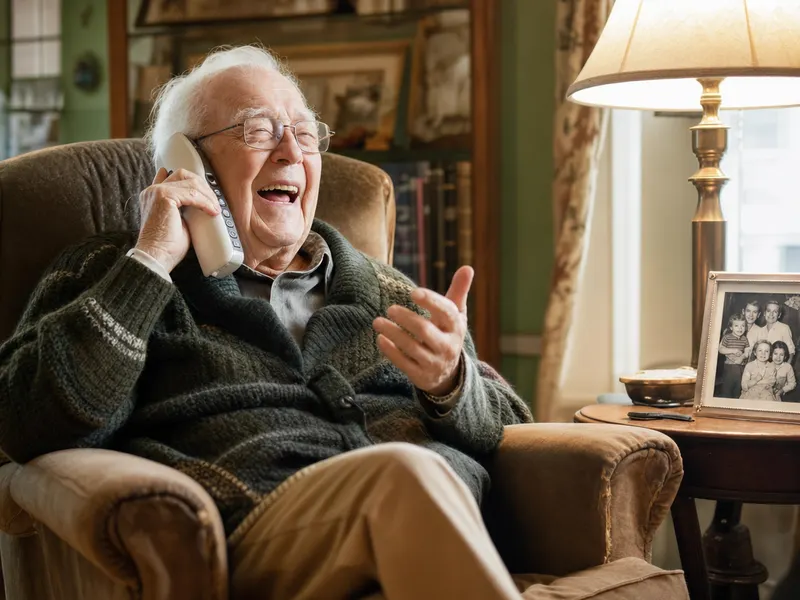
Meminto calls automatically with the next question.
Learn more →
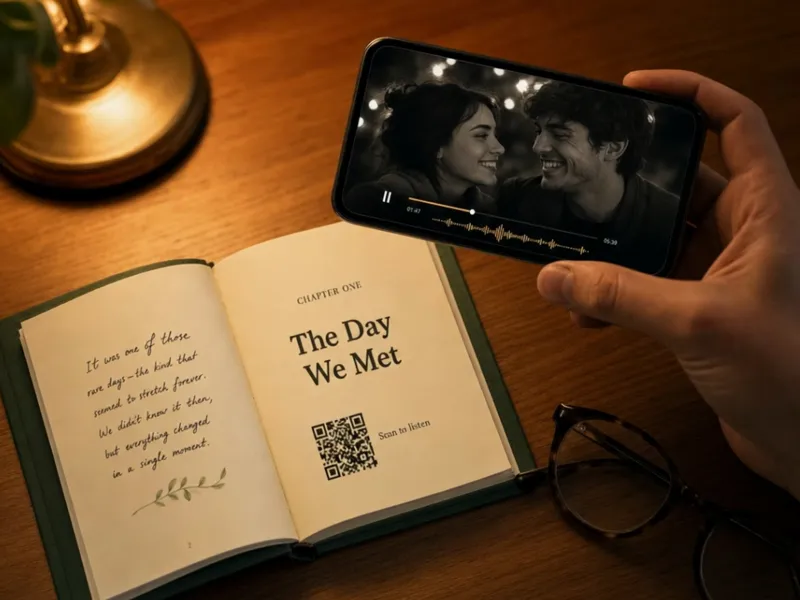
A book you can listen to.
Learn more →
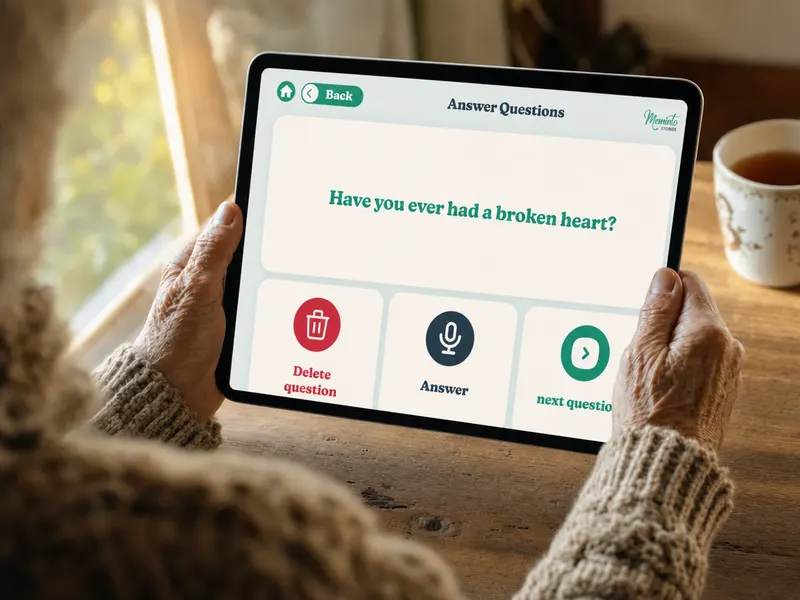
One question. One clear next step.
Learn more →
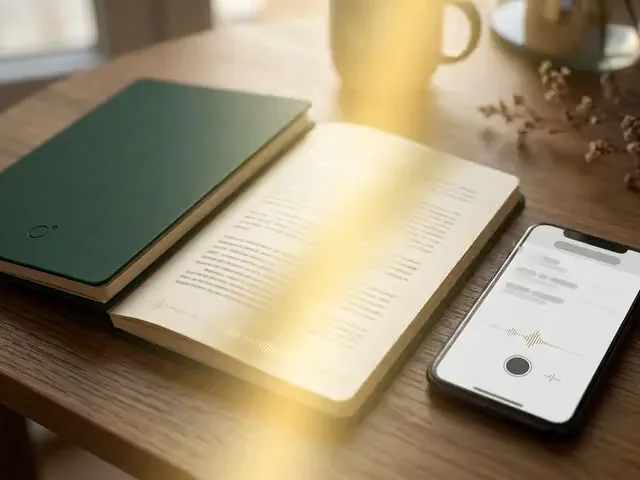
Your words, gently polished.
Learn more →

One book, many voices.
Learn more →
Everyone tells it the way that comes easiest.
4.8One-time purchase · no subscription
Real Life Story Books. Real people.
These are real Meminto customers and their own books—not models holding a prop.
Stories from real Meminto customers
“With just one question per week, I was able to record my life story. That was a lot of fun! I am proud of my book and am already preparing the second book.”
Werner
Germany
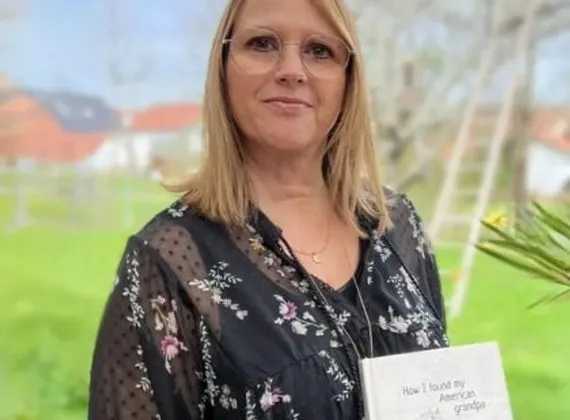
“I felt well taken care of by Meminto. They made me feel like my project was just as important to them as it was to me. I am proud to finally hold my book in my hand.”
Anja
Germany
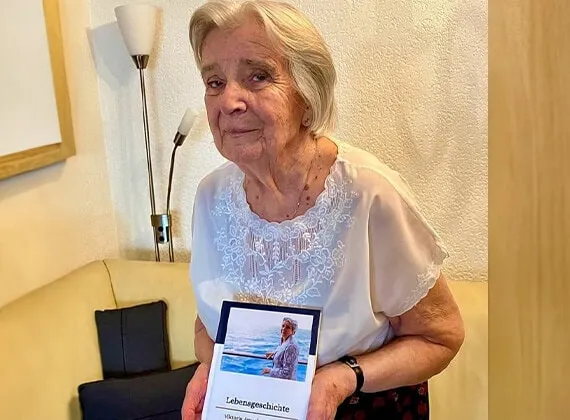
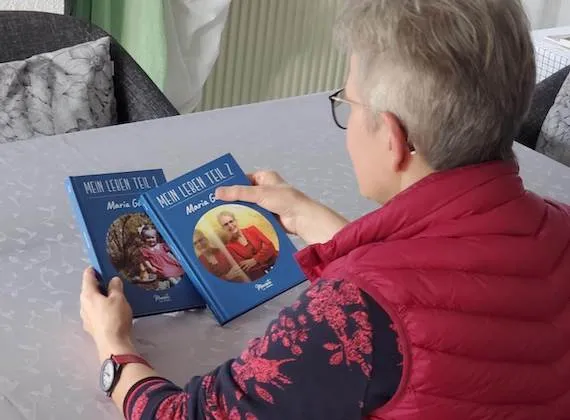
“Together with my son I have been able to record almost a century of history. We have created 16 books in German and seven in English. My family lives widely scattered. They were very happy.”
Viktoria
Switzerland
Your family’s book can look exactly like these.
4.830-day money-back guarantee
What arrives in the post
Turn the cover and look through the questions, stories and photographs that make a Life Story Book feel personal.
4.8 out of 576 reviewsMeminto on Trustpilot
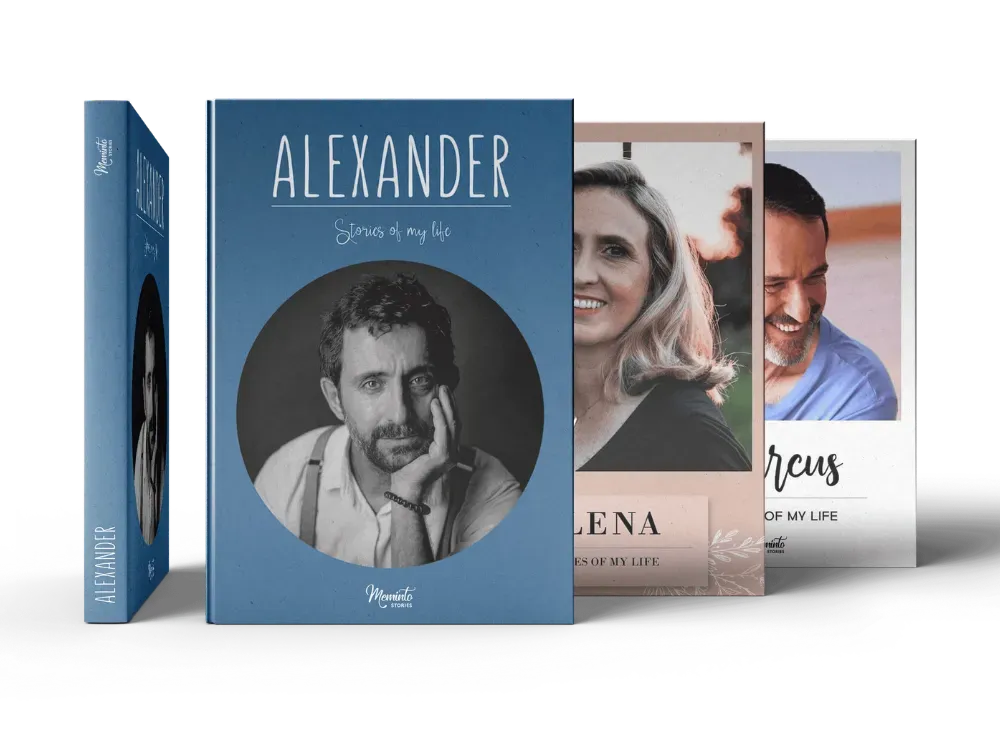 Hardcover, 5.8 x 8.3 inch, matte
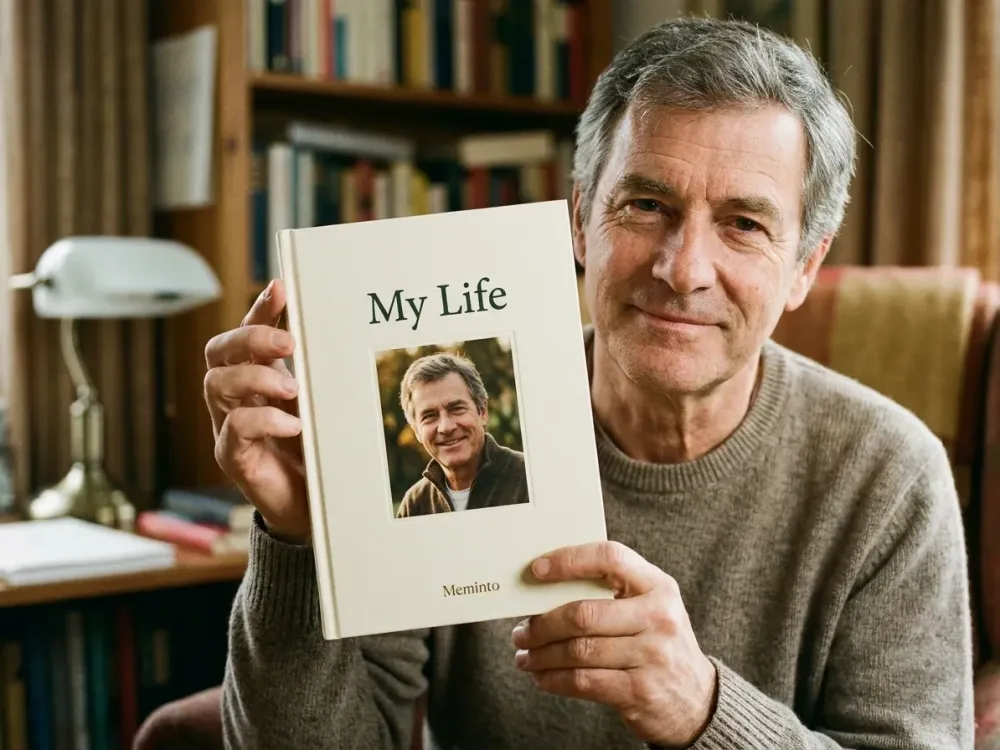 Your Life Story
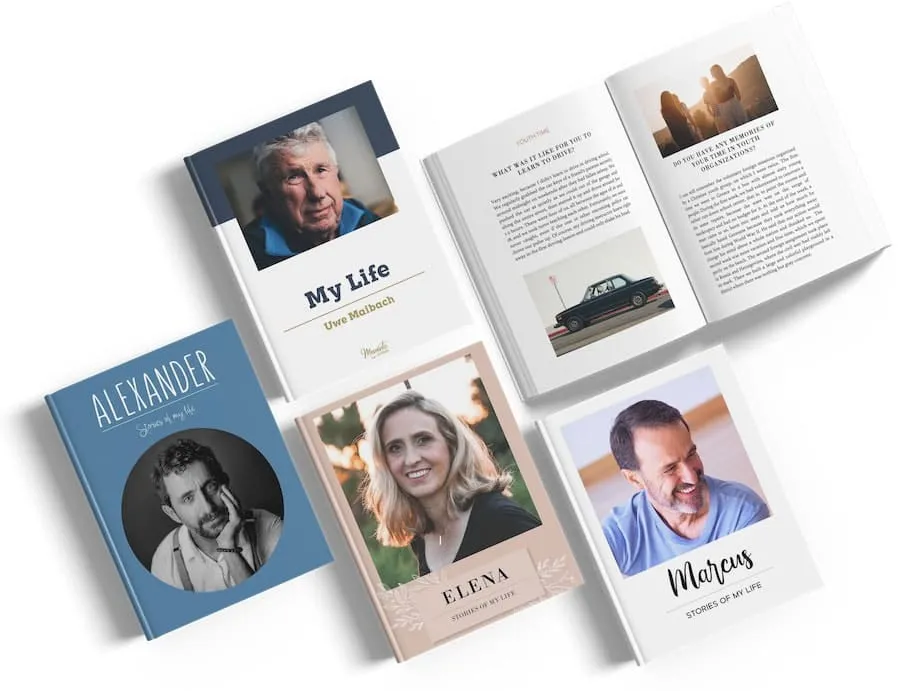 Many layout templates available
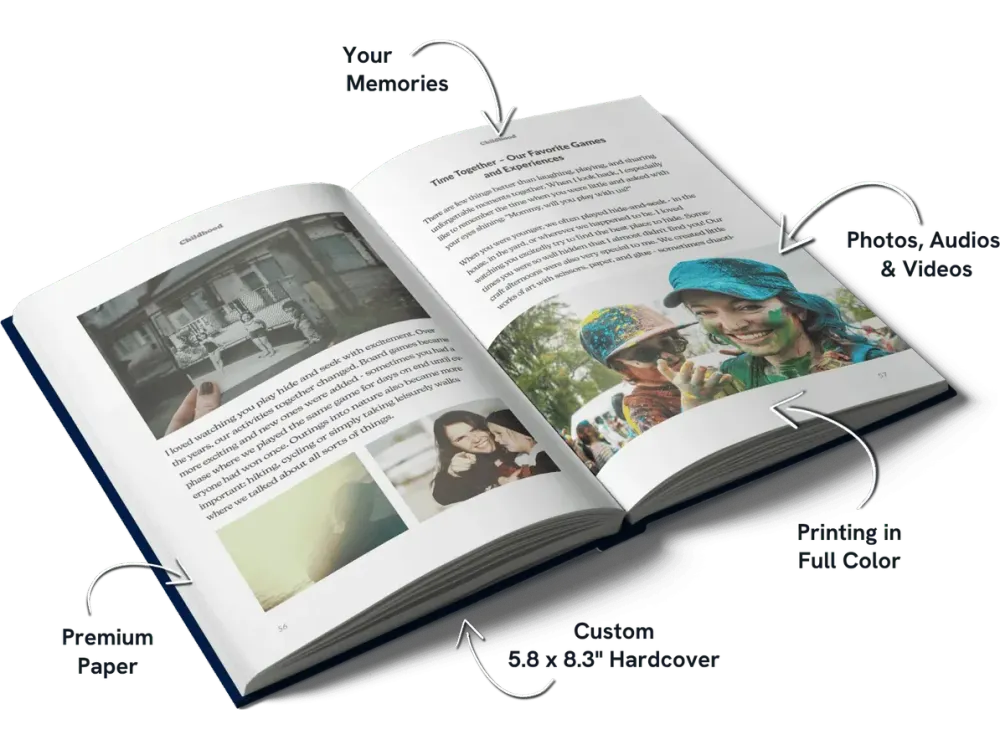 Integrate texts and media
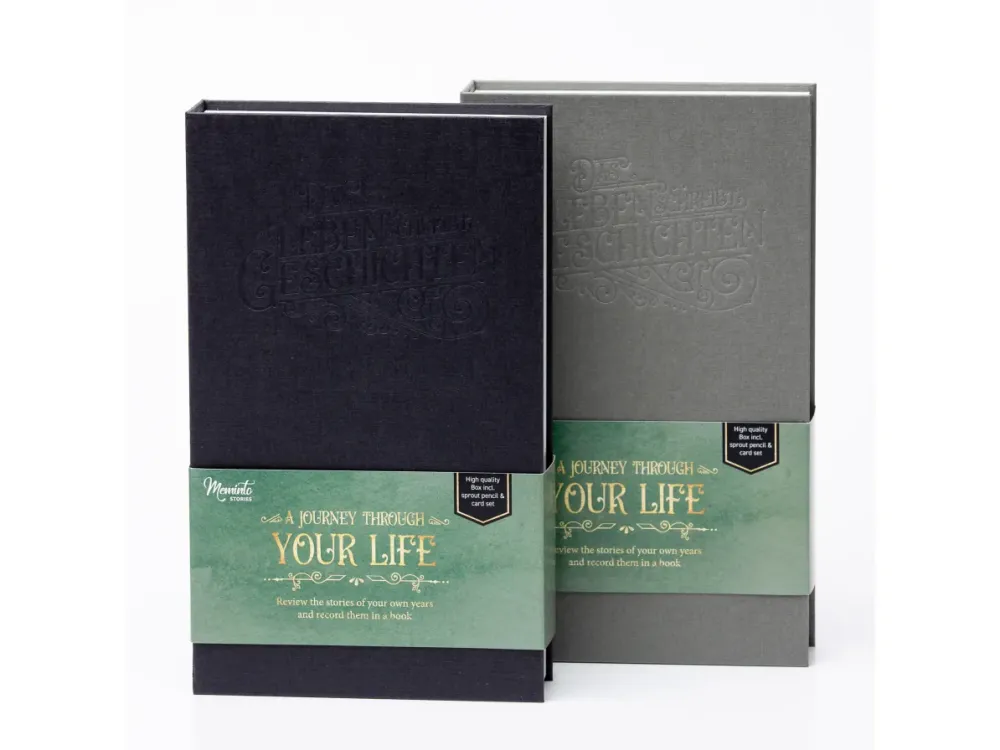 Optional Gift Starter Box
Choose your Life Story Book
Start as a gift or for yourself. The global checkout lets you choose the plan, page range and extras without losing the Life Story Book you selected.
Your Life Story Book can include:
Starting at $99
4.8/5 TrustScorePlans, page ranges, extra copies and gift options are shown in checkout.
If it doesn’t fit, you get every cent back. No discussion.
No subscription, no expiry. Recordings downloadable anytime, GDPR-compliant on EU servers.
Real people who answer personally. Plus live webinars, a thorough help centre and a trained AI assistant that helps around the clock.
Clear answers for choosing, giving and creating your life story book.
A Life Story Book is a guided memory book that records a person’s life through questions, stories, photos and optional audio or video. Meminto organises the material into chapters and helps turn it into a personal printed hardcover.
It is often given to a mother, father, grandmother or grandfather, especially for a milestone birthday, retirement or Christmas. It also works for anyone who wants to write their own life story for children and grandchildren.
No. Short, natural answers are enough, and speaking can be easier than typing. You can record audio, use optional transcription and edit the result later. The memories matter more than perfect prose.
Yes, through Meminto’s optional automated phone feature. After activation, the system can call at a chosen weekly time and read the next question. The feature costs extra, and transcription is a separate optional step using Meminto Credits.
The finished book is a personalised matte 5.8 × 8.3-inch hardcover with full-colour pages. You choose the cover, chapters and page range; audio and video can remain connected to printed stories through QR codes.
Life Story Book plans start at $99 as a one-time purchase, not a subscription. Plan features, page ranges, extra copies and gift options are shown transparently in checkout.
Yes. Meminto is developed and supported in Germany and works with worldwide printing partners so books can be printed close to their destination. Available delivery options are shown during checkout.
Meminto combines editable prompts, text, voice, video, family collaboration, optional phone answering and a personalised printed book. That flexibility helps the project adapt to the storyteller instead of forcing every person through the same workflow.
Meminto works directly in your browser — on a computer, tablet or phone, with nothing to install. If you prefer speaking to typing, you can also use the Meminto app for iOS and Android.
Meminto as an app:



Choose the right memory book
Explore the Meminto path that fits the story you want to preserve — all within one family of memory books.
To give and keep telling
These companions turn the book project into a personal occasion for giving or remembering together.
The first question is enough
Give someone the invitation to tell their life—or start preserving your own today.
From $99 · one-time purchase · no subscription