
Youth Book for Your Child
Preserve the story of how your child grew up. And give it to them as a printed book.
School, friendships and the first big decisions: Parents answer 52 questions about their child growing up. Your memories, photographs and voices become a printed book for your son or daughter.
One-time payment · no subscriptionYou create the project. Your child later receives the finished printed book.
Excellent4.8TrustScore

- 52 questions about your child
- Speak or write
- Up to 480 pages · unlimited photos from Complete
- Family can add memories
When did you first realize I was no longer a little child?
Sometimes one moment changes the way you see everything.
What your child cannot know
The photographs are still there. But does your child know the stories behind them?
Many memories of your child growing up live only with you as parents. If you do not tell them, your perspective, the small details and part of your family history will fade over time.
What you create
A book about growing up – told by you
The Youth Book is for parents who want to preserve their child’s later childhood and teenage years. Meminto asks about school, friendships, interests, adolescence, first big decisions and shared family moments. Answer by voice or in writing and turn it all into a personal book your child can hold in their hands.


Your family story
The years when a child becomes their own person.
School, friendships, first decisions: preserve how you experienced this time together, including the small moments that might otherwise live only in your memories.
How it works
You tell the story as parents. Meminto guides you through your child’s growing-up years with questions – until they become a book you can place in your child’s hands.
 01
01Choose questions about your child
52 prepared questions guide you through school, friendships, interests and the defining moments of the teenage years. Adapt or skip any question.
The questions provide structure; you shape the story.
 02
02Tell the memories
Answer in the app by voice or in writing. This is where you preserve how you experienced your child growing up.
Your memories, in your own words.
 03
03Add family and photographs
Add photographs and, within your plan, invite partners, grandparents or siblings. Each person can contribute memories from their own perspective.
Together, the picture becomes more complete.
 04
04Review, print and give
Review the writing, images and order. After your approval, the book is printed as a matte 5.8 × 8.3-inch hardcover – ready to give to your child.
We print only when everything is right for you.
Start a Youth Book for my child
4.8The first question about your child is ready.
Questions in your child’s voice
52 questions that bring your memories into the story
The questions help you preserve more than dates: the stories, feelings and observations behind them.
- 01
Why did you choose my name?
- 02
How did you experience my teenage years?
- 03
Which friendships shaped me most?
- 04
What was my greatest passion as a teenager?
Families remember more together
Other people close to your child can contribute
Your partner, grandparents or siblings can add their own memories and photographs within the selected plan. Your child receives more than a timeline: several loving perspectives on how they grew up.
Features
Telling stories has never been easier.

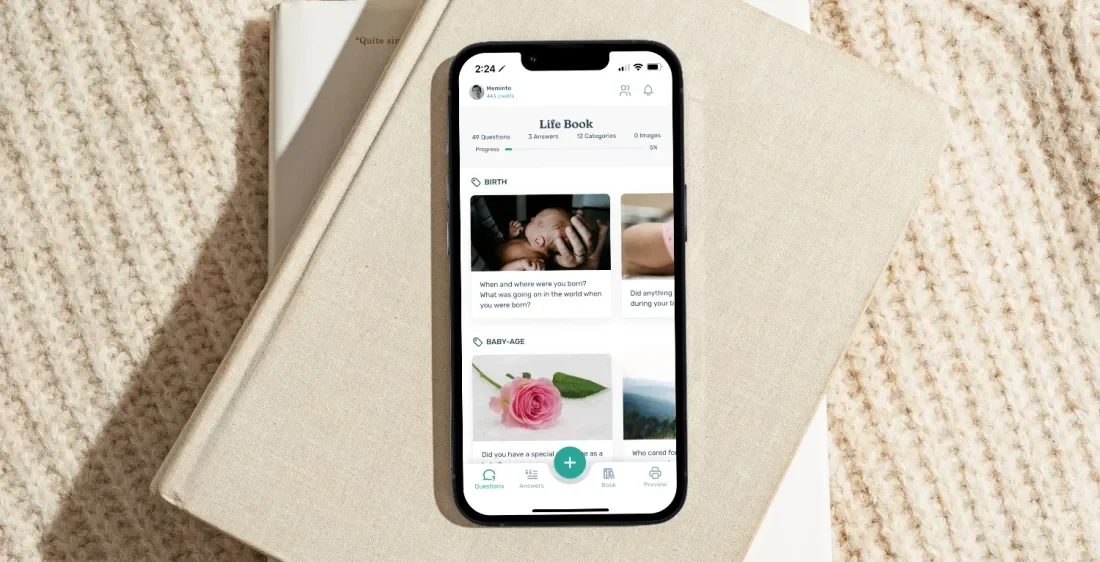


Gather memories as a family
4.8Begin on your own and invite other family members later.
Look inside
This is what a finished Youth Book looks like.
Explore the cover, paper and layout of a personal copy.
Voices and videos from those years
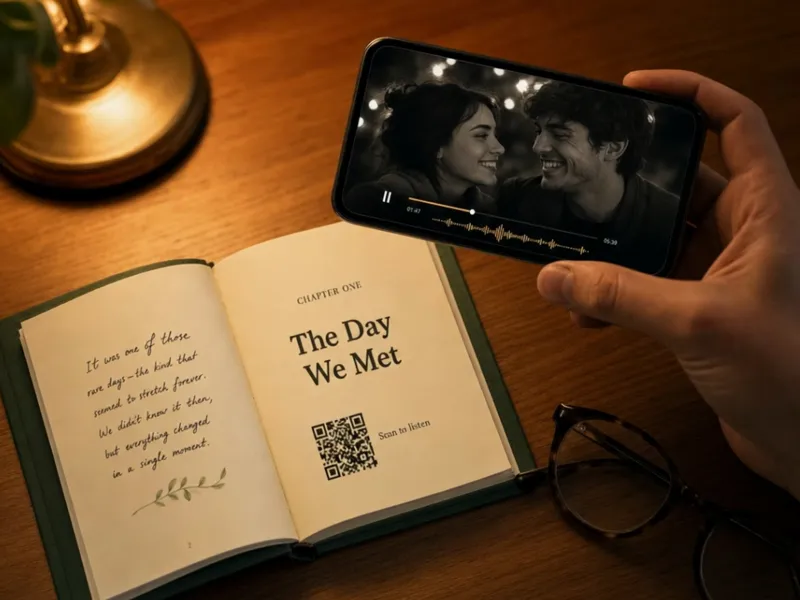
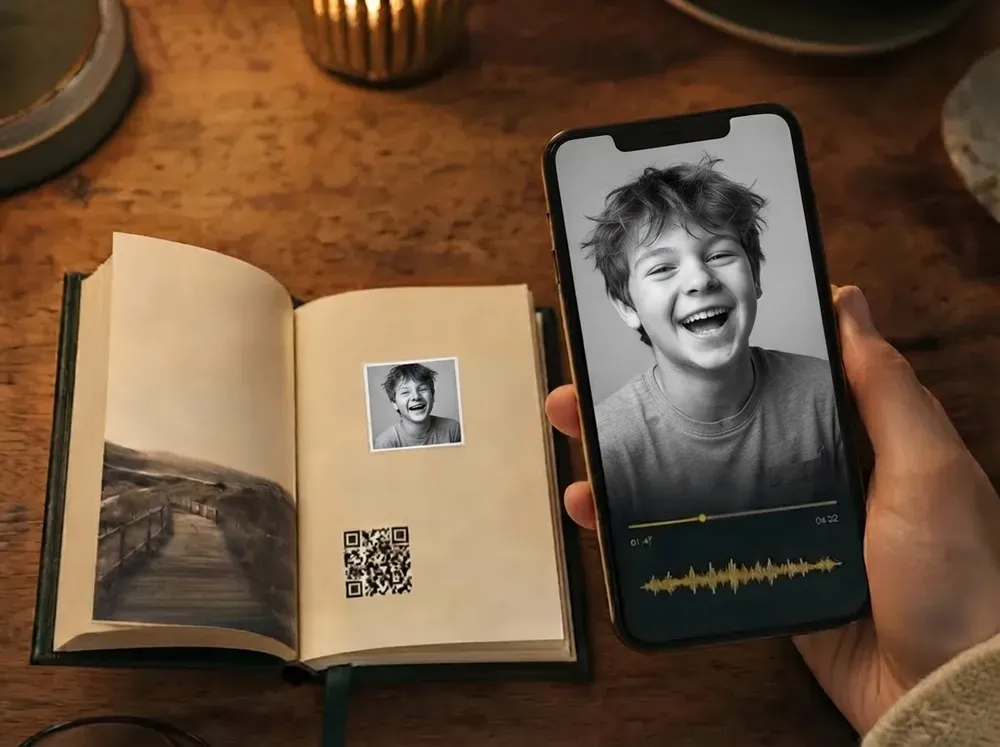
One QR code, and the moment plays again.
The phone clip from the first gig. The voice message after the exam came back. The recording where the voice still cracks. Next to any story in the book sits a QR code: hold your phone against it and you see and hear the moment again—instead of losing it in some old cloud folder.
4.8 out of 576 reviewsMeminto on Trustpilot
 Matte 5.8 × 8.3-inch hardcover
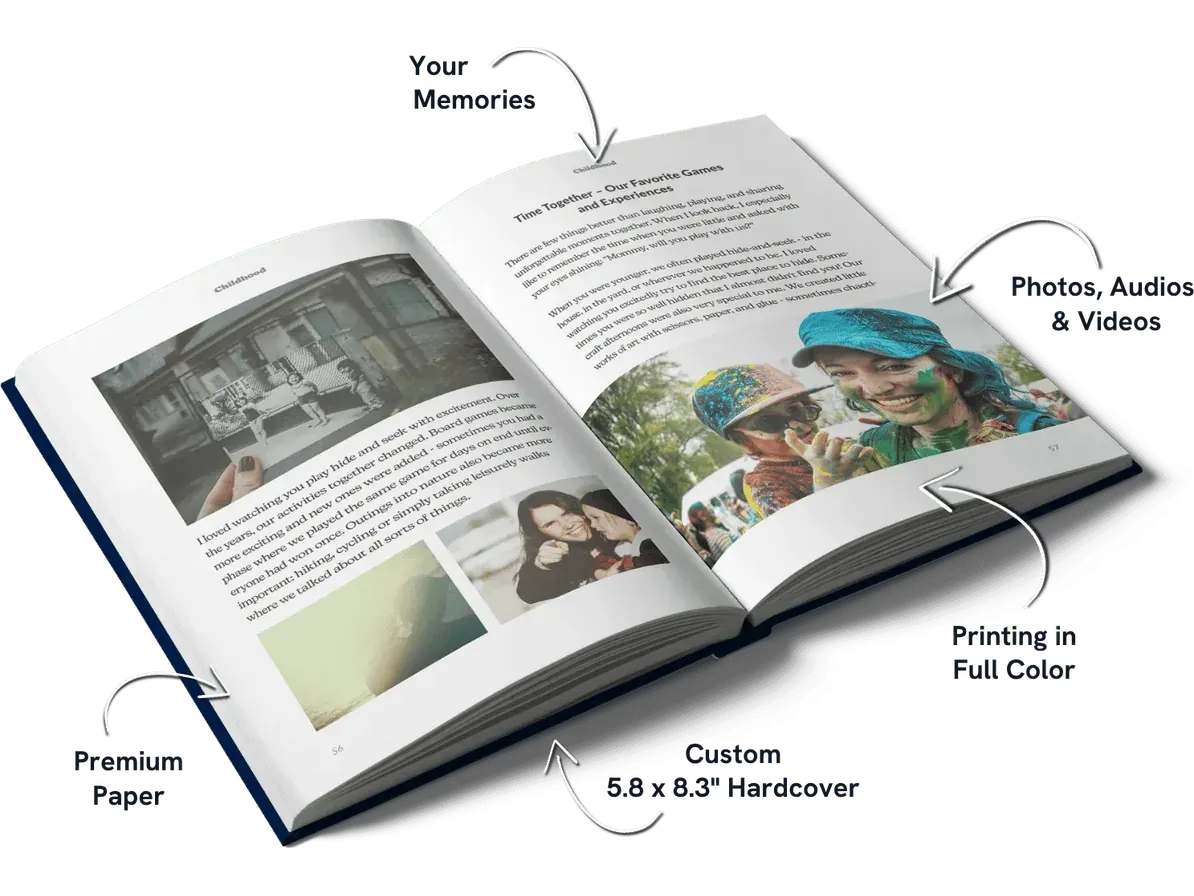 Personal layout
 Speak or type
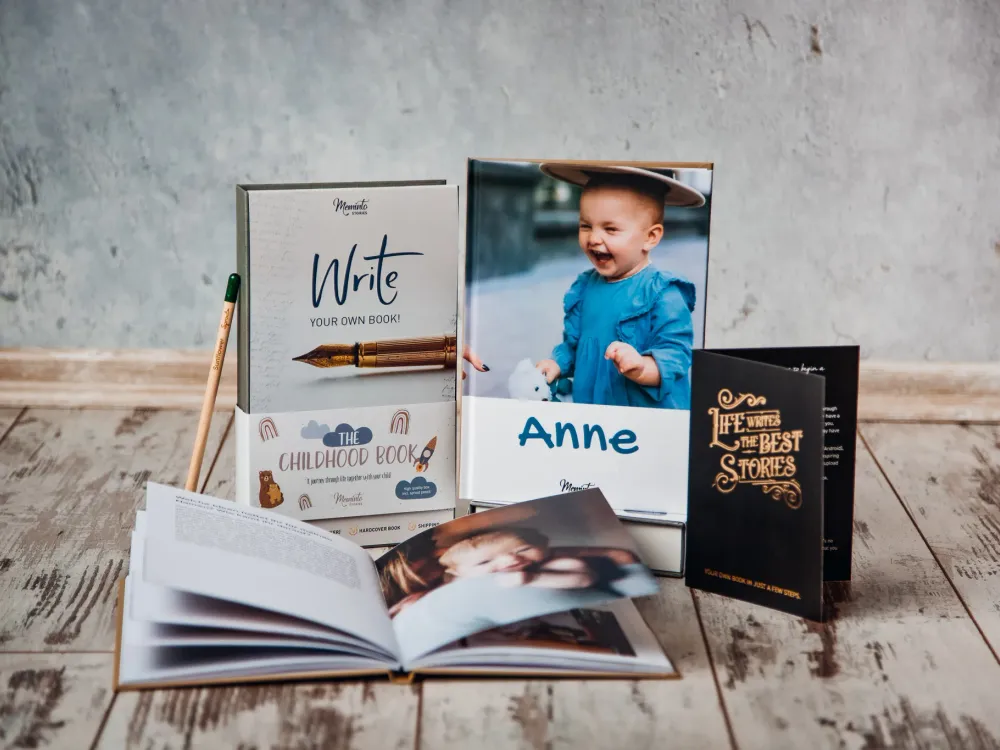 Great as a gift
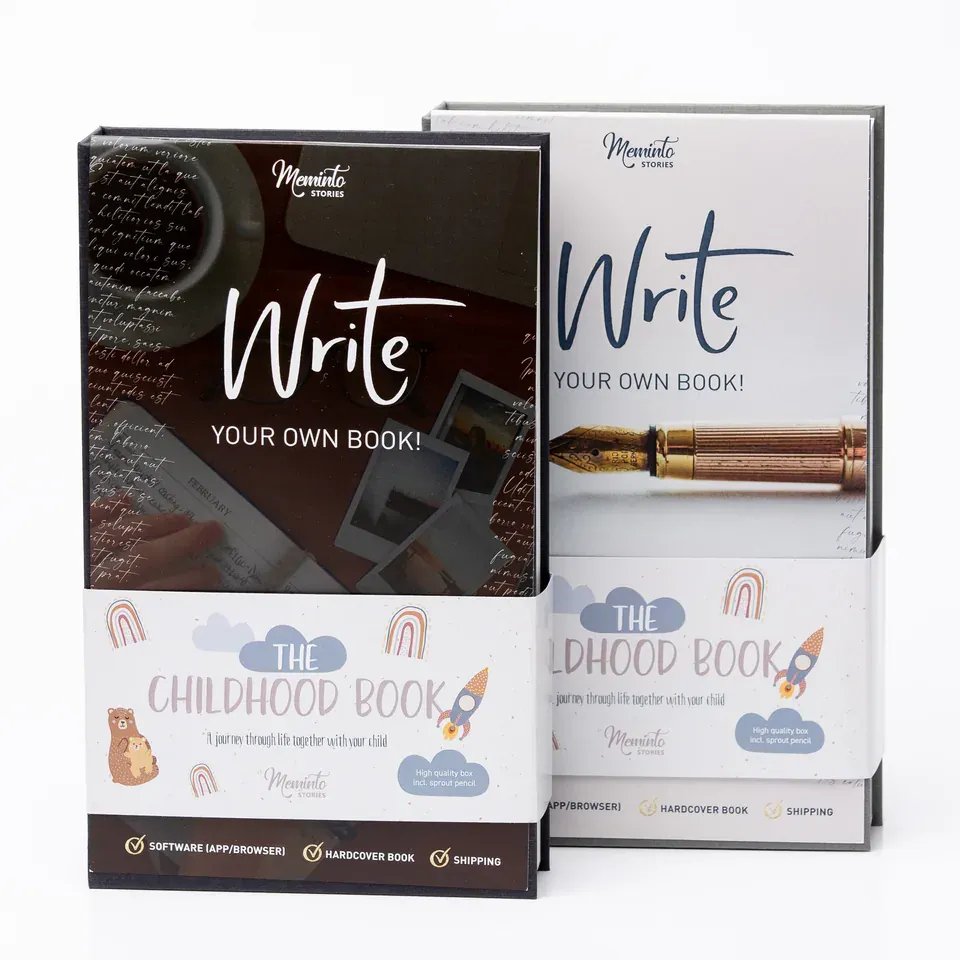 Gift box optional
What is included
Your child’s growing-up years – as a printed book
One copy is included. Additional copies – for siblings or grandparents – are available from US$49.
Included
- Printed matte 5.8 × 8.3-inch hardcover book
- 52 questions about childhood and adolescence, all customizable
- Speak or type your answers
- QR codes keep voice messages and videos in the book
- Additional copies from US$49
Starting at $99
4.8/5 TrustScoreYou as parents start and edit the project in the Meminto app. We print only after your personal approval.
You take no risk. Promise.
30-day money-back guarantee
If it doesn’t fit, you get every cent back. No discussion.
Your stories are yours
No subscription, no expiry. Recordings downloadable anytime, GDPR-compliant on EU servers.
Support until the book is finished
Real people who answer personally. Plus live webinars, a thorough help centre and a trained AI assistant that helps around the clock.
Everything you want to know about the Youth Book
Clear answers about the audience, collaboration, design and printing.
Who writes the Youth Book?
The parents or family write about the child growing up. The child later receives the finished printed book.
Is the book intended for teenagers?
Yes. It is a personal book for your teenage or grown child. The story itself is told by the parents and other people close to them.
When is a good time to begin?
Once there are enough school and teenage years to tell. Many parents give the finished book for an 18th birthday, graduation or when their child leaves home.
Can grandparents or siblings contribute?
Yes. Depending on your selected plan, you can invite others to add their own answers and photographs.
Do we have to write every answer?
No. You can record answers by voice. Meminto turns the recording into text that you can review and edit afterwards.
How long does printing take?
Around 10–12 days after your approval.
How does Meminto work in the browser – and is there an app?
Meminto works directly in your browser — on a computer, tablet or phone, with nothing to install. If you prefer speaking to typing, you can also use the Meminto app for iOS and Android.
Meminto as an app:



A gift in your voice
Give your child the story of how they grew up
Begin with the first question and turn your memories into a book that lasts.
Start free and decide in your own time.