




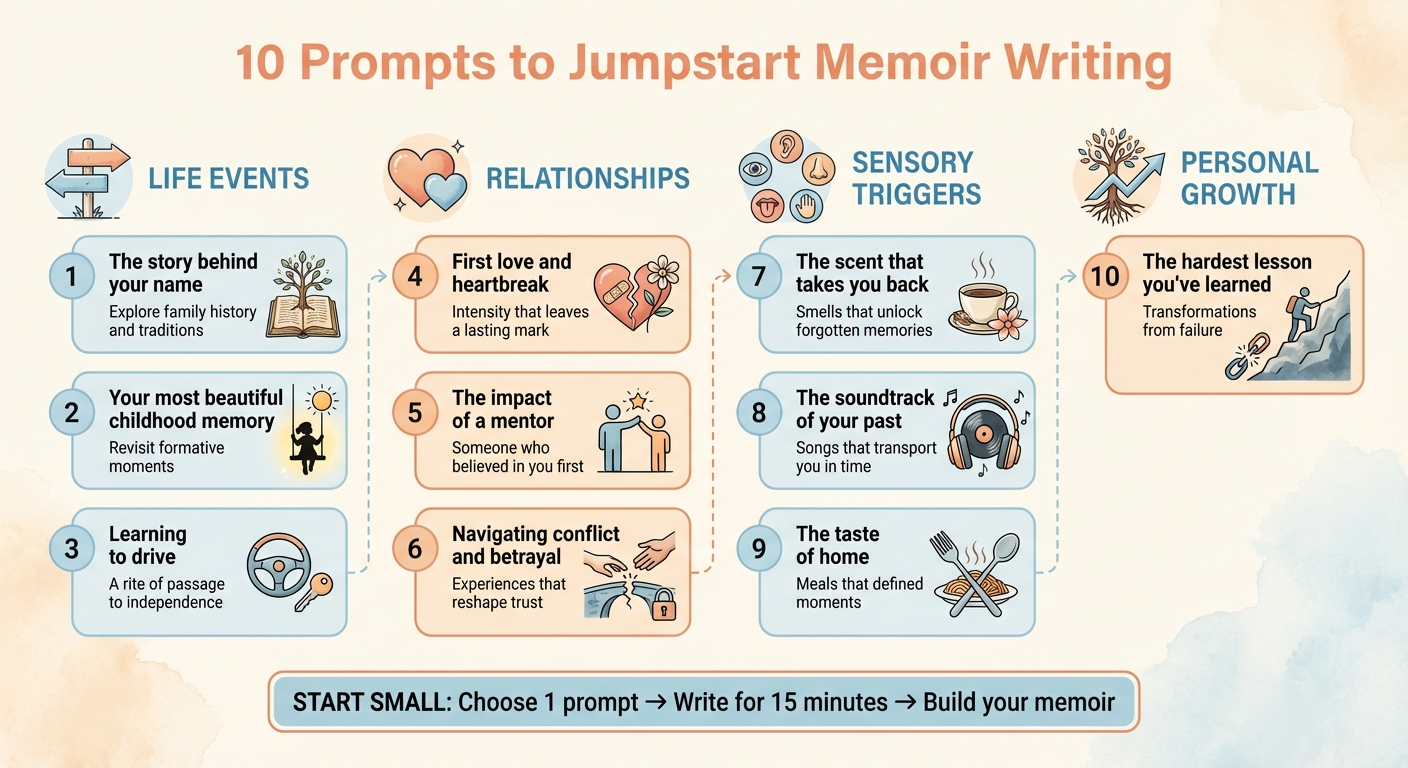
Stuck on where to begin your memoir? These 10 prompts can help you break through writer’s block and tap into vivid memories. From exploring the story behind your name to reflecting on relationships, sensory triggers, and personal growth, this guide offers practical ways to start capturing your life story. Here’s a quick overview:
- Life Events: Reflect on milestones like learning to drive or your favorite childhood memory.
- Relationships: Dive into moments like first love, mentorship, or navigating conflict.
- Sensory Triggers: Use smells, sounds, or tastes to bring forgotten moments to life.
- Personal Growth: Write about lessons learned, failures, or advice for your younger self.
Start small – choose one prompt, write for 15 minutes, and see where it takes you. These exercises can help transform scattered memories into a meaningful narrative.
10 Memoir Writing Prompts to Unlock Your Life Story
1. Life Events
Each prompt uncovers a unique piece of your story, offering endless inspiration for memoir writing.
The story behind your name
Ever wondered about the story behind your name? How did your parents settle on it?
This simple question can open a window into family history, traditions, and personal connections. Maybe you were named after a cherished relative or someone your parents admired. Your name might carry layers of meaning, representing dreams and values that were part of your life even before you were born.
Your most beautiful childhood memory
What’s your most cherished childhood memory?
This question invites you to revisit those moments that shaped you. Perhaps it’s the smell of cookies baking in your grandmother’s kitchen, the feel of grass under your feet during endless summer afternoons, or the sound of your sibling’s laughter. These memories bring your past to life, offering a glimpse into the experiences that made you who you are.
Learning to drive
What was your experience learning to drive?
This milestone is about more than just getting behind the wheel – it’s a rite of passage that often symbolizes independence. Whether you were cautious at every turn or passed your test with ease, this moment reflects a growing sense of confidence and the first taste of freedom. Meminto Stories recognizes this as a defining event for many, marking the transition into adulthood.
sbb-itb-e3574dd
2. Relationships
After reflecting on the defining moments of your life, it’s time to delve into how relationships have shaped your journey. Relationships play a central role in molding who we are, and exploring them can reveal some of the most genuine and impactful parts of your story.
First love and heartbreak
Your first love is unforgettable – it carries an intensity that leaves a lasting mark. Whether it ended with heartbreak or quietly faded away, this experience likely transformed your understanding of intimacy and connection. As Writer-ish puts it:
Memoirs are not a recounting of every fact or statistic of your entire life… but a glimpse into a particular moment.
Think about the pivotal moment when your perception of love shifted. Was it during that first kiss, the bittersweet goodbye, or the moment you realized it was over? Use vivid sensory details to draw readers into that memory. Maybe it was the song playing softly in the background, the trembling of your hands, or the exact words exchanged. These details bring the scene to life and make the emotions tangible.
The impact of a mentor
Who was the person who believed in you before you believed in yourself? Perhaps it was a teacher who stayed late to guide you, a grandparent who shared their wisdom, or a coach who pushed you to reach beyond your limits. Focus on specific moments when their support or advice changed your perspective or helped you make a life-altering decision. Maybe a single conversation gave you clarity, or their encouragement led you to take a leap you wouldn’t have otherwise considered. These moments often steer the course of our lives in ways we only recognize later.
Navigating conflict and betrayal
Conflict brings depth to any story, and relationships are often tested by disagreements or betrayals. Paul Roberts, a writer and business consultant, explains:
Disagreements make for drama, and dramatic tension keeps a reader engaged.
Think about a time when a conflict with someone close – whether a falling out, a family argument, or an act of betrayal – changed the dynamic of your relationship. How did this experience reshape your trust or your role in the relationship? As Amy Lou Jenkins observes:
Perhaps your place in the family changed as your parents aged. The transition from baby of the family to caregiver may be your story.
Instead of simply stating that the relationship was strained, show the emotional weight through specific actions, words, or moments. These details allow readers to feel the evolution of your emotions and the impact of the experience, grounding your memoir in authentic emotional growth.
3. Sensory Triggers
Sensory triggers have a unique way of connecting emotions to the physical details of your past, acting as a bridge to moments you may have thought were long forgotten.
Memories are deeply tied to your senses. A single scent, sound, or taste can instantly transport you to another time, bringing vivid details rushing back. Kathryn Kay, Founder of A Writer Within, puts it perfectly:
More than any other sense, smell can connect us intimately to the past in a way our ideas cannot.
These sensory cues cut through overthinking and take you straight to the core of your experiences, unlocking the moments that shaped your story.
The scent that takes you back
Peel an orange, take a deep breath, and let the memory unfold. Maybe it’s the excitement of Christmas morning or a carefree summer road trip with the windows rolled down. As Kay explains:
A scent can initiate a flood of memories regardless of how unexpected or fleeting.
The smell of an old sweater carrying your mother’s perfume, the musty aroma of your childhood bedroom, or even the sharp, sterile scent of a hospital waiting room can bring entire scenes from the past vividly to life.
The soundtrack of your past
Put on a song that stirs up strong emotions and see where it takes you. Music has an uncanny ability to transport you to specific times and places with remarkable clarity. Jacqueline Fisch, an Intuitive Writing Coach, notes:
When an old song comes on the radio, it brings those foggy memories and feelings back to life. Those are the feelings you can use to inject into your writing next time you feel stuck.
Beyond music, focus on smaller auditory details – like the creak of a screen door, the whistle of a kettle, or the hum of holiday conversations – to fully immerse yourself in the memory.
The taste of home
Think about a meal that defined a moment in your life. What flavors stand out? What was the mood around the table? Who was there? Taste carries an emotional weight that words often struggle to convey. These sensory details don’t just enrich your writing – they invite readers to step into your world and experience it as you did. By weaving these tactile memories into your narrative, you create a deeper connection, paving the way for reflection and personal insight.
4. Personal Growth
Personal growth is often the thread that ties a life story together, shaping who you are beyond just memories and relationships.
The hardest lesson you’ve learned
Think about a moment when you faced failure head-on. What did it teach you that success never could? These moments often lead to the most profound transformations, forcing us to confront challenges and uncover hidden strengths.
Writer-ish puts it perfectly:
Writing our personal narratives is a way to remember and process our own life experiences, to help us understand the significant events of our lives that helped shaped who we are.
Dive into the specific changes that came from your experience. Maybe a career setback taught you the value of resilience, or perhaps a tough relationship helped you discover your independence. The real story lies in how you grew from "before" to "after."
Another powerful exercise is writing a letter to your younger self. What advice would you give from your current perspective? This simple act not only highlights your growth but also creates a natural and compelling narrative arc.
Each reflection on personal growth adds depth to your memoir. To bring these reflections to life, consider using Meminto Stories. With its thoughtful prompts and multimedia tools, it helps you transform your journey into a beautifully bound hardcover book.
Conclusion
Prompts have a unique way of bringing forgotten moments to life and turning scattered thoughts into meaningful stories. By zeroing in on specific events, relationships, sensory details, or pivotal moments, these prompts offer clarity and direction, especially when creativity feels out of reach.
Memoir writing through prompts is all about starting small and building momentum. Choose one prompt, set a timer for 15 minutes, and write freely without worrying about perfection. Werner, 68, reflected on his experience:
With just one question per week, I was able to capture my life story. It was fun!
This bite-sized approach transforms what might seem like an overwhelming task into manageable weekly sessions. Over time, these small efforts accumulate, shaping a complete memoir while also fostering a sense of accomplishment.
Once your stories are written, Meminto Stories can help turn them into a beautifully crafted hardcover book. Their platform offers guided prompts, AI-powered speech-to-text tools, and customizable chapter layouts. Whether you prefer writing, speaking, or recording videos, Meminto takes care of the rest – from formatting to high-quality printing.
The true reward lies not just in preserving memories but in creating a legacy your family can hold and share. As Maria, 63, expressed:
Thanks to the questions from Meminto, my narrative became colorful and varied.
Your life story is worth more than scattered notes tucked away in a drawer. It deserves to be told, preserved, and cherished for generations.
Start with just one prompt today and take the first step toward turning your memories into a lasting legacy.
FAQs
How can using sensory details improve my memoir writing?
Incorporating sensory details – like what you see, hear, smell, taste, and feel – can bring your memoir to life, making it more vivid and captivating. These details don’t just add color to your writing; they also help you tap into memories with greater clarity. Think about how the scent of freshly baked cookies or the rhythmic patter of rain on a windowpane can instantly transport you to a specific moment in time. These sensory cues enrich your storytelling by adding depth and authenticity.
For readers, sensory details make your narrative more immersive and relatable. By engaging their senses, you create a connection that feels almost tangible. This technique can also be a powerful tool for breaking through writer’s block. Sensory triggers serve as prompts, sparking creativity and helping you unlock memories that might otherwise stay buried. With this approach, personal experiences can evolve into stories that truly resonate and linger in the minds of your audience.
How can I start writing about my personal growth?
Starting to write about personal growth might feel like a daunting task, but using creative prompts can make it much more approachable – and even enjoyable. Think back to the defining moments of your life: times when you overcame obstacles, discovered a passion, or learned something that changed your perspective. These moments often highlight how you’ve evolved over the years.
To kick things off, try asking yourself questions such as: What was a major turning point in my life? or What challenge taught me the most about who I am? Zeroing in on specific memories or themes can give your writing structure and depth. The trick is to stay curious and let your reflections naturally shape the story you want to tell.
Why should I include my relationships in my memoir?
Including the relationships in your memoir adds layers of depth and context, showing how the people around you have shaped your path. These connections bring emotional weight to your story, making it easier for readers to engage on a personal level.
Whether you’re writing about family, friends, mentors, or significant others, exploring these dynamics can highlight key moments of growth, conflict, or transformation in your life. These shared experiences not only enrich your narrative but also make it more relatable and impactful for your audience.