
What to Write in a Student’s Memory Book: 20 Teacher Examples

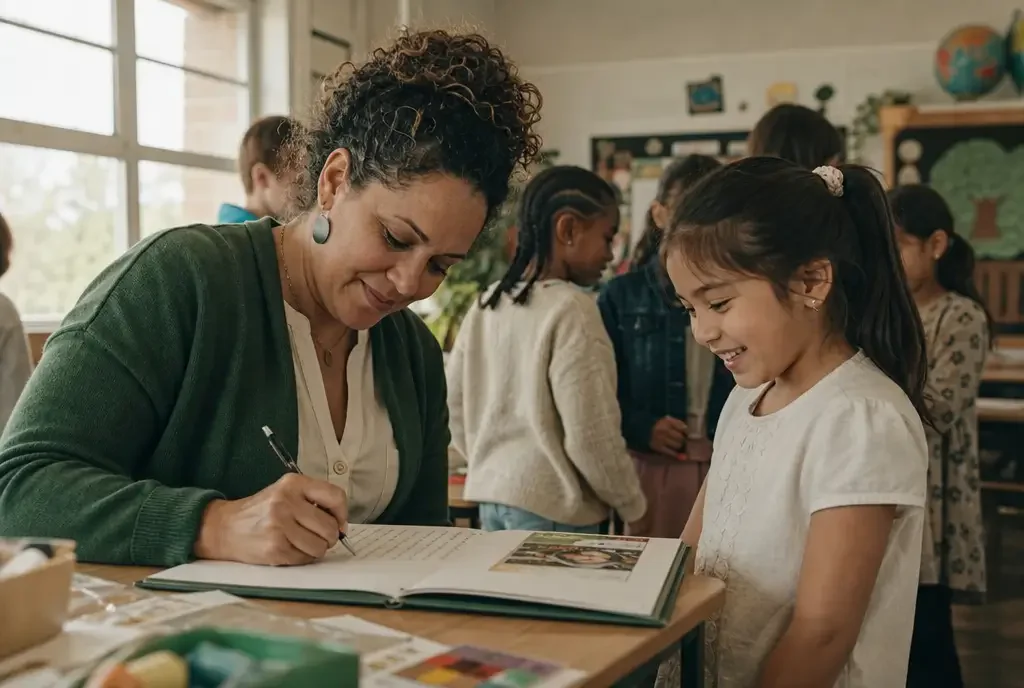
Write a student memory-book message that makes the student feel seen. The simplest formula is: name a specific moment or strength, say what it meant, and offer one genuine hope for what comes next. You do not need a long speech for the note to stay with them.
20 messages you can copy and adapt.
Use these as they are, or replace a detail in braces with the nickname, project, question, or day that only you would remember.
Preschool and kindergarten.
- “You walked in holding someone’s hand and you are leaving holding your own book. What a year, {name}.”
- “Nobody in this room laughed louder or shared faster. Thank you for both, {name}.”
- “You were the first one to say good morning, every single day. It made the room warmer.”
- “I will miss the way you told stories with your whole body. Keep telling them.”
- “You learned to write your name this year. One day you will write it on something big.”
Elementary and middle school.
- “You asked the question everyone else was too shy to ask. Keep doing that, {name}.”
- “I watched you go from ‘I can’t’ to ‘let me try one more time.’ That is the whole thing.”
- “When {classmate} was having a hard day, you noticed before I did. That is a rare kind of smart.”
- “Your {project} still sits at the front of my mind — you cared about getting it right.”
- “You made this class kinder just by being in it. Thank you for that, {name}.”

End of year and graduation.
- “Whatever you do next, do it the way you did {subject} this year: all in.”
- “You made me a better teacher. I hope someone tells you that again in ten years.”
- “This is not goodbye — it is the end of one chapter I got to be in. Thank you.”
- “Take the curiosity with you. Everything else you can learn later.”
- “I cannot wait to hear what you are up to. Come back and tell me.”
Short lines for a small space.
- “Bright, brave, and completely yourself. Never lose that.”
- “Best of luck, {name} — from the teacher who saw you try.”
- “You belong in every room you walk into.”
- “Thank you for a year I will remember.”
- “Onwards, {name}. I am cheering for you.”
What to include in a message.
A specific observation.
Mention a question they asked, a project they persisted with, the way they welcomed a new student, or an inside joke that is kind to repeat. Specificity tells a student the message belongs to them, not to anyone in the class.
Growth, not only achievement.
A grade, award, or performance can be worth recognizing, but growth often gives a message more staying power. Name courage, kindness, curiosity, patience, creativity, or the decision to try again after a difficult day.
One forward-looking line.
End with a simple wish: keep asking questions, take your curiosity with you, or remember that you belong. Avoid predicting a student’s future; encouragement is more useful when it leaves room for them to become themselves.
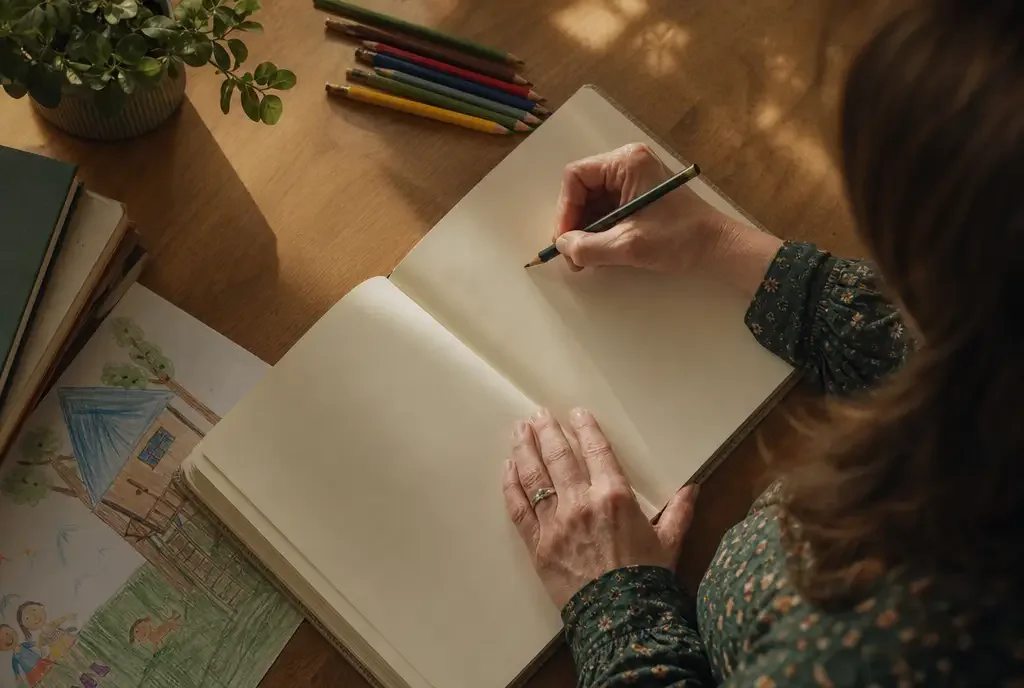
Write it in five minutes.
- Pick one student and one moment you remember clearly.
- Write one sentence about what you saw or appreciated.
- Add one sentence of encouragement.
- Read it once to make sure it sounds like you.
- Sign your name and the school year.
For a class project rather than a single note, decide early who contributes, which photos can be shared, and how much space each student receives. If you are collecting a longer school-year story, a youth memory book can provide a separate way to gather photos and reflections.
Why the effort matters.
A teacher’s message can become evidence that a student was noticed at an important age. The note does not have to be perfect. A few honest words about who they were in your classroom can be the line they return to years later.