Promptly vs Kept: Which Memory Journal Fits Your Family?


Promptly and Kept both help families keep childhood memories in a physical book, but they solve the blank-page problem differently. Choose Promptly if regular, specific prompts would help you keep going. Choose Kept if you would rather have a beautiful, open space for the moments you decide matter.
The quick comparison.
| Question | Promptly | Kept |
|---|---|---|
| Writing style | More guided, with specific prompts | More open-ended, with room to choose what to record |
| Best for | People who want a nudge about what to write | People who prefer a less structured journal |
| Format | Physical prompted journals across several themes | Physical childhood memory book with a focused format |
| Pace | Prompts can support a regular routine | You can return whenever a moment feels worth recording |
| What to consider | Some prompts may not fit every family | A blanker page can require more initiative |
Product details, prices, colors, materials, and shipping policies change. Check each maker directly before buying; the useful comparison is the writing experience you will actually use.
Promptly: guided prompts for a regular habit.
Promptly’s approach is built around prompts that tell you where to begin. That can be a relief if you want to document a child’s life but repeatedly postpone writing because a blank page feels too big.
The trade-off is that a question can occasionally feel too narrow for your family or arrive at the wrong moment. Treat prompts as invitations, not homework: answer the ones that fit, skip the ones that do not, and add a short note when a day matters.

Kept: open space for the moments you choose.
Kept’s childhood memory-book approach leaves more room for reflection in your own words. It can suit people who want to capture personality, funny observations, and ordinary family moments without following a regular checklist.
The benefit is flexibility. The challenge is momentum: without a question waiting for you, it helps to keep a small note on your phone and transfer a few memories whenever you have time.

Which one is right for you?
Choose Promptly when structure helps you act.
Promptly is likely the better match if you like a clear next question, want a recurring writing rhythm, or tend to leave open-ended projects unfinished. Its structure can help a busy parent turn a few minutes into a record of the year.
Choose Kept when you want freedom to follow the story.
Kept is likely the better match if you prefer to write in your own voice, want plenty of whitespace, or care more about personality and everyday scenes than a standard milestone sequence.
Choose neither if you need several voices or a digital backup.
A physical journal keeps the original handwriting and can feel wonderfully private, but it is one object in one place. If you want relatives to contribute, want to add voice recordings, or want a backup while you are creating the book, a digital-first process may be more practical.
A third path: guided stories with a printed result.
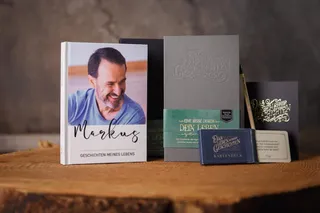
Some families want both a prompt to begin and more flexibility than a single handwritten journal offers. A Meminto life story book uses questions as a starting point while allowing typed answers, photos, and voice recordings before a printed book is made. It is not a replacement for either journal style; it is a different workflow for families who want to collect stories across people and time.
Make the choice easy to keep.
The best memory journal is the one you will open again next month. Pick the format that lowers the barrier for you, keep it where you will see it, and allow imperfect entries. A sentence about a funny breakfast can become as valuable as a carefully planned milestone once enough years have passed.